 DeepLightSeek
I. Introduction
The first step in optical manufacturing is selecting the right optical material. The optical parameters (refractive index, Abbe number, transmittance, reflectance), physical properties (hardness, deformation, bubble content, Poisson's ratio), thermal characteristics (coefficient of thermal expansion, thermo-optic coefficient), and chemical stability of an optical material collectively determine the performance of the final optical component or system. This article provides a systematic overview of three major categories of common optical materials—optical glass, optical crystals, and specialty optical materials—along with their typical grades and application scenarios.
II. Major Categories of Optical Materials
Optical materials are a general term for substances with specific optical properties and functions used in optical experiments, instruments, and applications. Based on their nature, optical materials can be divided into inorganic and organic systems. Inorganic materials primarily include optical glass and long-range-ordered optical crystals, while organic materials are mainly represented by optical plastics, which offer the advantages of light weight and impact resistance. Glass-ceramics constitute a special category that lies between glass and crystals. Optical glass is the most widely used light-transmitting medium, while optical plastics, due to their lightweight and shock-resistant properties, are increasingly applied in consumer optical products such as eyeglass lenses, mobile phone cameras, and VR/AR devices.
III. Optical Glass
Optical glass is an amorphous (glassy) light-transmitting medium. As light passes through it, its propagation direction, phase, and intensity can be controllably altered, making optical glass widely used in the fabrication of prisms, lenses, mirrors, windows, and filters. It features high transparency, chemical stability, and a high degree of uniformity in its physical and chemical properties, with precise and reproducible optical constants. In its low-temperature solid state, glass retains the amorphous structure of its high-temperature liquid state. Ideally, its physical and chemical properties (such as refractive index, thermal expansion coefficient, hardness, thermal conductivity, electrical conductivity, and elastic modulus) are identical in all directions, a property known as isotropy. Based on optical performance and composition, colorless optical glass can be further divided into crown glass (K) and flint glass (F). Crown glass has a lower refractive index and higher Abbe number (low dispersion), while flint glass has a higher refractive index and lower Abbe number (high dispersion). Combining these two types can correct chromatic aberration in optical systems.
Major global manufacturers of optical glass include SCHOTT (Germany), Corning (USA), OHARA (Japan), and CDGM (China).
Common Optical Glass for the Ultraviolet Band: UV-grade fused silica (UVFS) is the most common material for the UV band. Commonly used quartz grades include domestic Chinese types JGS1, JGS2, and JGS3, as well as Corning 7980. JGS1 is produced by high-purity oxyhydrogen flame fusion, has a hydroxyl content of about 2000 ppm, and achieves over 90% transmittance at 185 nm, making it an excellent material for the 185–2500 nm range. JGS2 is also produced from quartz raw material with an oxyhydrogen flame, has a hydroxyl content of 100–200 ppm, and offers good transmittance in the 220–2500 nm range. JGS3 is manufactured using a vacuum electric melting process, contains almost no hydroxyl groups, and is suitable for infrared applications in the 260–3500 nm range. Corning 7980, a high-purity synthetic fused silica, offers superior homogeneity and lower bubble and impurity content, providing a higher laser-induced damage threshold, which makes it widely used in laser components. OHARA offers high-quality quartz glass grades such as SK-1300, SK-1310, SK-1320L, and SK-1321. For applications at wavelengths ≤450 nm, fused silica is typically the preferred material; when λ > 450 nm, optical glasses such as N-BK7 can be selected.
Common Optical Glass for the Visible and Near-Infrared Band: In the visible to near-infrared band (approximately 350 nm – 2.0 µm), the most commonly used optical glass materials include SCHOTT N-BK7, float glass B270, and CDGM H-K9L. N-BK7 and H-K9L have similar optical properties and can be used interchangeably. N-BK7 is a typical borosilicate crown glass with a refractive index of 1.51680 at 587.6 nm. H-K9L fine-annealed optical glass is a hard glass resistant to scratching and chemicals. Due to its low bubble and impurity content, it is well-suited for manufacturing high-precision lenses, windows, and prisms.
Illustrations: The following three technical charts show the distribution of various CDGM optical glass grades on the Abbe diagram (refractive index vs. dispersion relation), the refractive index curves of common glass grades as a function of wavelength, and the transmittance curves of different glass grades in the UV-VIS-NIR range. These provide an intuitive reference for optical design and material selection.
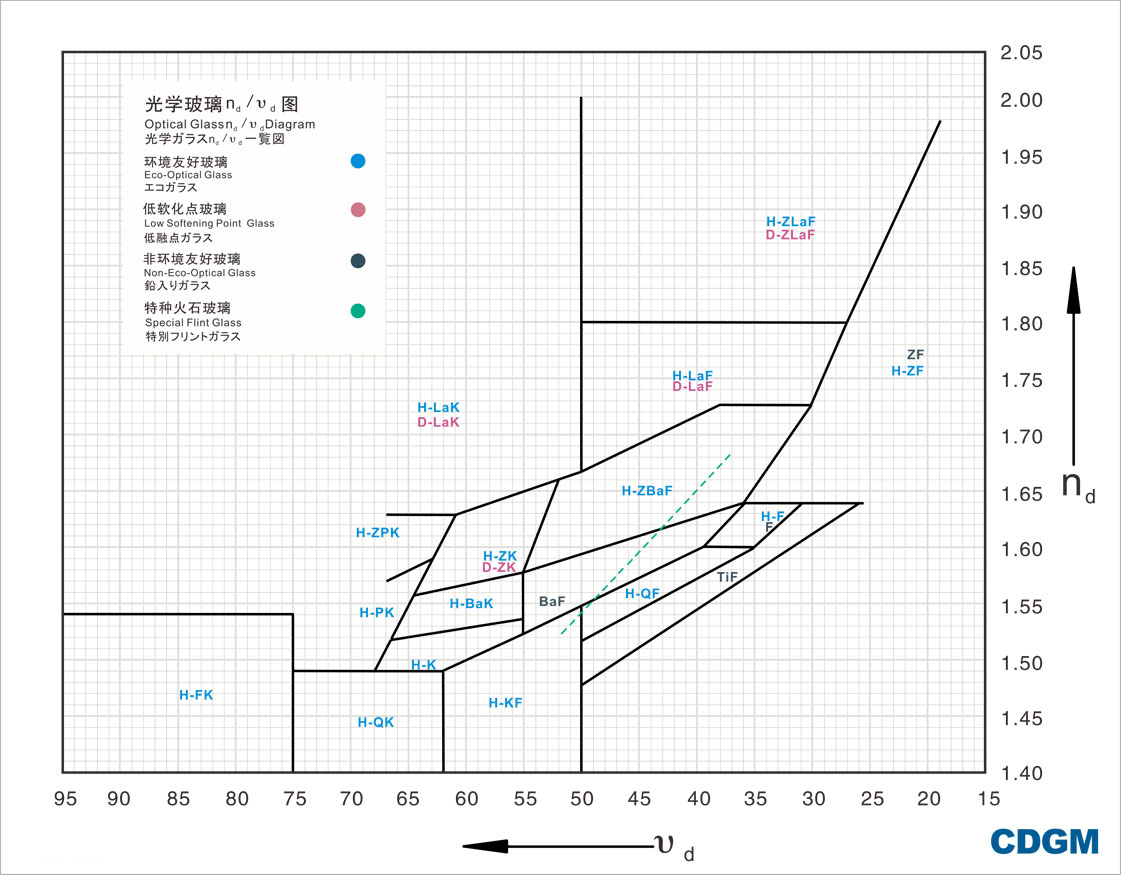
(Fig. 1: Refractive index and dispersion diagram for CDGM optical glass grades)
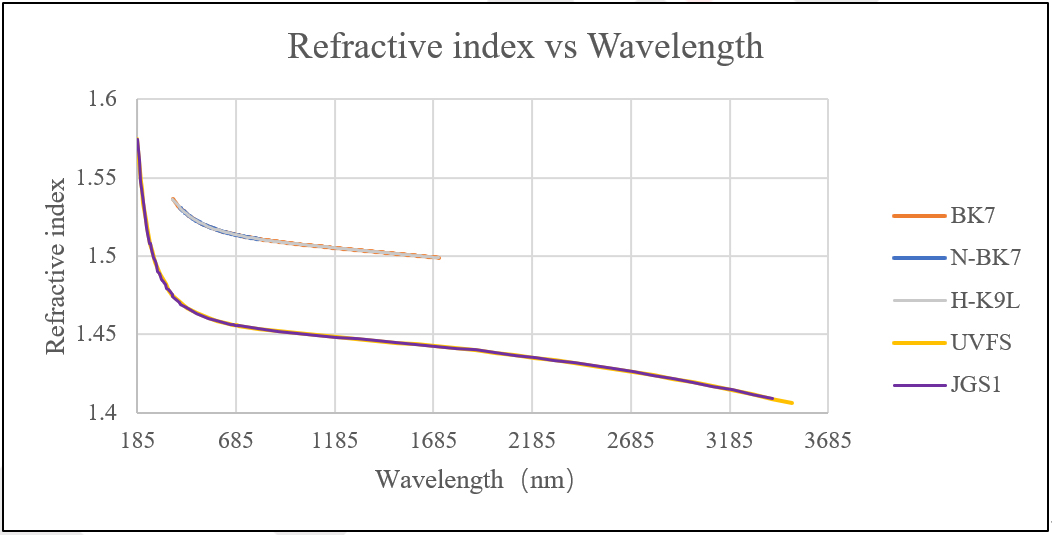
(Fig. 2: Refractive index curves for common optical glass grades)
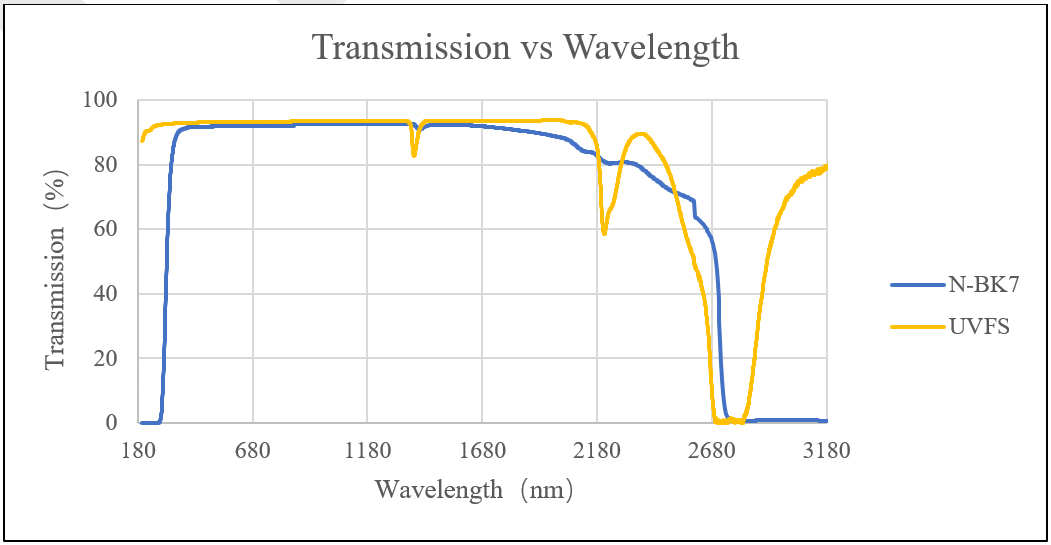
(Fig. 3: Transmittance curves for common optical glass grades)
IV. Optical Crystals
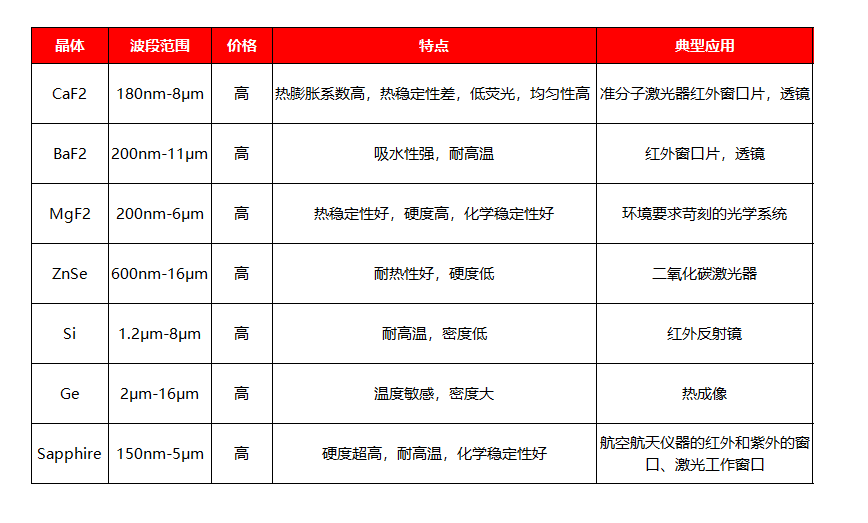
Optical crystals are a general term for crystalline materials used as optical media. Due to their ordered crystal structure, optical crystals exhibit excellent optical performance in the ultraviolet, visible, and infrared bands and are widely used to fabricate windows, lenses, and prisms for UV and IR applications. They are divided into single-crystal and polycrystalline types; single-crystal materials offer higher crystalline integrity, higher optical transmittance, and lower scattering losses, making them the most commonly used.
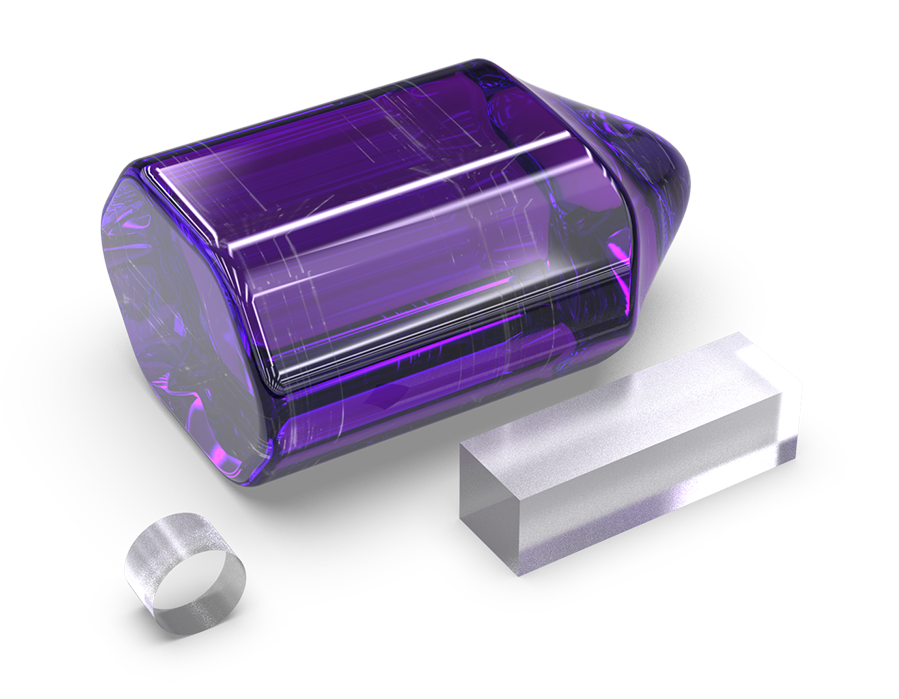
Common optical crystals can be classified by application as follows:
-
UV and IR Crystal Materials: Including quartz (SiO₂), fluorite (CaF₂), lithium fluoride (LiF), rock salt (NaCl), silicon (Si), and germanium (Ge).
-
Polarizing Crystals: Commonly used polarizing crystals include calcite (CaCO₃), quartz (SiO₂), and sodium nitrate (nitratine), which exploit their birefringence to create polarizing optical elements.
-
Apochromatic Crystals: The unique dispersion characteristics of crystals are used to make apochromatic objectives. For example, combining fluorite (CaF₂) with glass forms an apochromatic system that can effectively correct spherical aberration and secondary spectrum.
-
Laser Crystals: Used as the active medium in solid-state lasers, such as ruby, calcium fluoride, and neodymium-doped yttrium aluminum garnet (Nd:YAG) crystals.
Key Properties of a Representative Material—Calcium Fluoride (CaF₂) Crystal:
Calcium fluoride crystal is a highly representative high-performance material among optical crystals. Its refractive index nd = 1.43384 and Abbe number νd = 95.23 indicate extremely low dispersion. The transmission range of CaF₂ covers from 130 nm (deep ultraviolet) to about 8 µm (infrared). It also possesses excellent laser durability, radiation resistance, and a refractive index homogeneity better than 0.5 ppm. In a dry environment, CaF₂ can withstand temperatures up to 1000 °C; however, in a humid environment, performance degradation may occur at temperatures above 600 °C. These properties make it widely used in precision optics, semiconductor lithography, astronomical observation, and laser technology.
Crystal materials are available in natural and artificially grown forms. Natural crystals are scarce, while artificial growth processes are challenging, limited in size, and expensive. Crystals are typically chosen only when glass materials cannot meet the requirements (e.g., for use in non-visible wavelength bands), primarily in the semiconductor, laser, and related industries.
V. Specialty Optical Materials
Glass-Ceramics
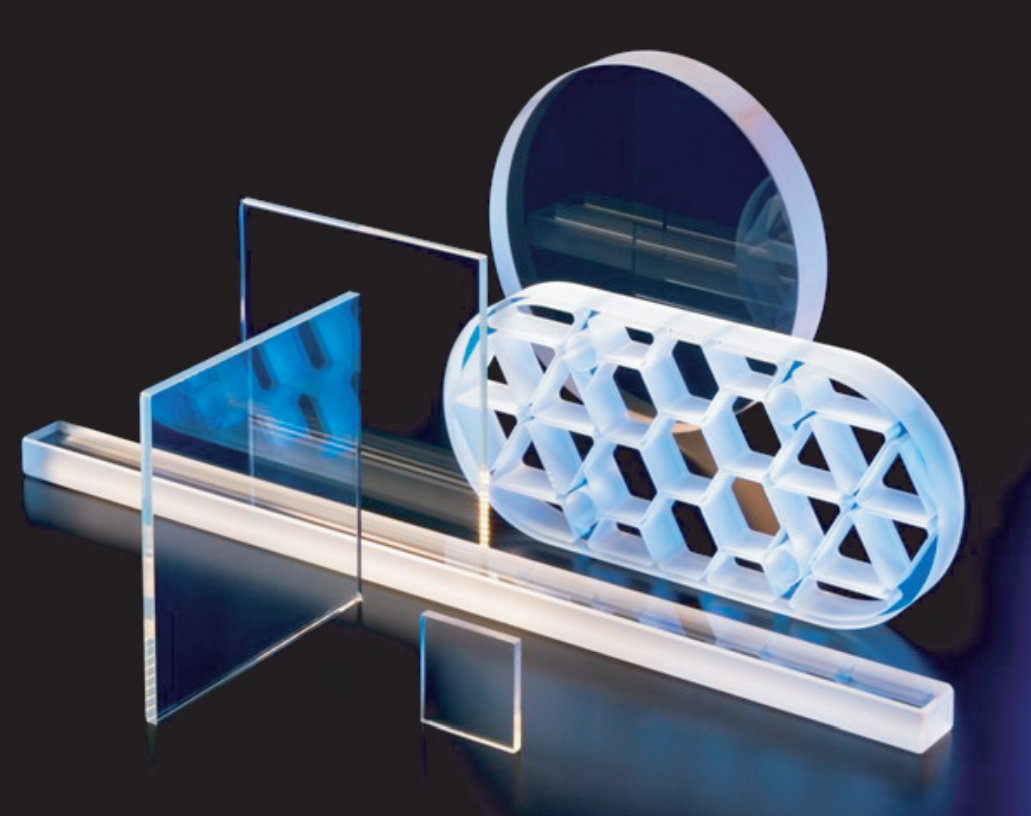
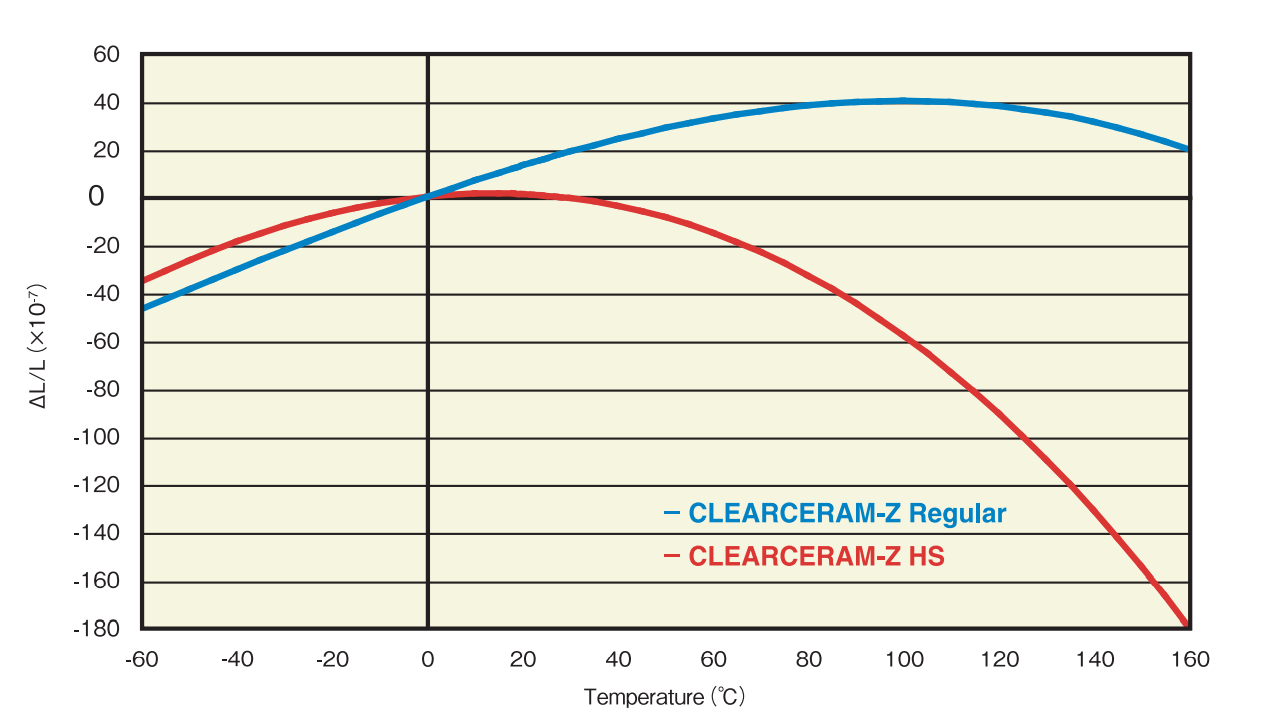
Glass-ceramics are a type of specialty optical material that lies between glass and crystals. The key difference from ordinary optical glass is their crystalline structure, while the main difference from traditional ceramics is that their crystalline structure is much finer. Glass-ceramics are characterized by a very low coefficient of thermal expansion, high strength, high hardness, low density, and extreme stability. They are widely used in the fabrication of optical flats, standard meter scales, large reflective mirrors, and laser gyroscopes. Currently, the mainstream international glass-ceramic products include Corning's ULE® ultra-low expansion glass and SCHOTT's ZERODUR® glass-ceramic. ULE® is an amorphous glass in the SiO₂–TiO₂ system with good optical transparency, suitable for transmissive optical elements. ZERODUR® is a microcrystalline composite (approx. 70% crystal + 30% glass phase) with high mechanical strength but is opaque, making it the mainstream choice for astronomical telescope mirror substrates. The coefficient of thermal expansion (20–300°C) of ULE® is 0 ± 0.02 × 10⁻⁶/K, with a typical value of 0 ± 30 × 10⁻⁹/K over the 5–35°C range.
Silicon Carbide
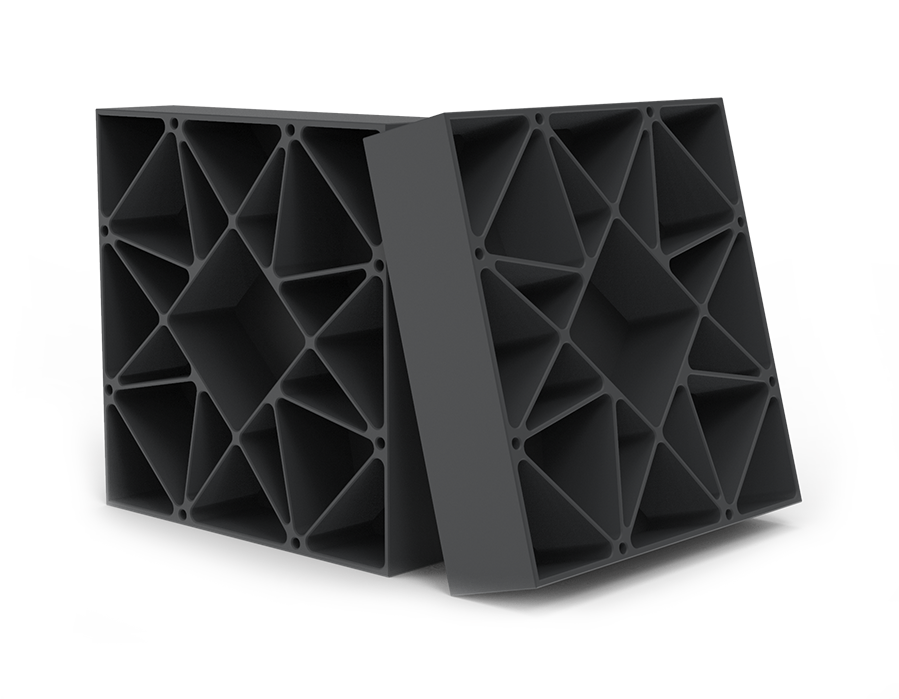
Silicon carbide (SiC) is a special ceramic material that can also serve as an optical material. SiC possesses high specific stiffness, a low coefficient of thermal deformation, excellent thermal stability, and significant lightweighting advantages. In the field of large-aperture optical mirrors, it offers advantages that traditional glass materials cannot match and is considered the premier choice for large-size, lightweight mirrors, with wide applications in space remote sensing, ground-based large-aperture telescopes, high-energy lasers, and semiconductors. Recently, the Changchun Institute of Optics, Fine Mechanics and Physics (CIOMP), in collaboration with the Technology and Engineering Center for Space Utilization (CSU), proposed an innovative "graphite/silicon carbide composite powder additive manufacturing method." This increased the silicon carbide content in the SiC mirror body from 46.36% to 64.54%, successfully fabricating a topological structure SiC mirror with a diameter of 220 mm. After processing, the optical surface achieved a figure accuracy better than λ/50 RMS (λ = 632.8 nm) and a surface roughness of only 0.772 nm.
VI. Other Important Optical Materials
In addition to the three major categories of light-transmitting media mentioned above, optical materials also include optical fiber materials (used in fiber-optic communication systems), optical thin-film materials (used for anti-reflection coatings, high-reflection coatings, and filter coatings), liquid crystal materials (used in display devices), and various luminescent materials. With the rapid development of emerging fields such as solid-state lighting, laser technology, optical communication, biomedical imaging, and VR/AR, the application scope of optical materials is continuously expanding. The continuous advancement of optical technology relies on the iterative development of optical material technology.
